Web3Index
From 2023 to 2025, I was the sole product designer on a seven-person team. I designed Web3Index as it grew from a category directory into an AI research and outreach product covering 30,000+ companies.
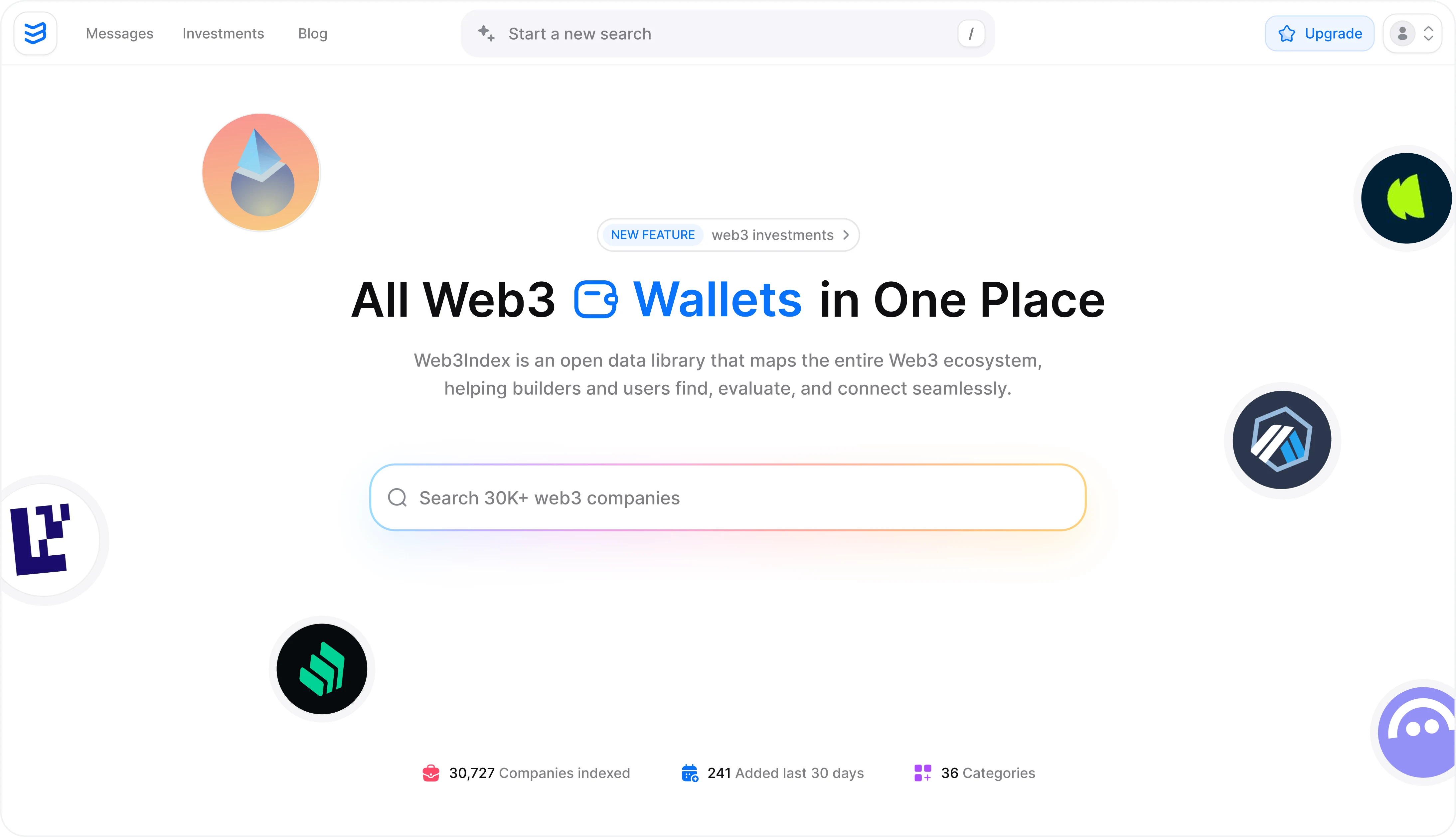
Web3Index helps business development teams, investors, founders, and analysts move from an open-ended research question to a company shortlist and direct outreach in one product. AI search handles the question; structured profiles preserve the evidence behind the answer.
- Role:
- Head of Design, sole product designer
- Scope:
- Product strategy, UX/UI, prototyping, and design system
- Team:
- Founder and CEO, five engineers, and me
- Surfaces:
- Desktop and mobile-responsive web product
Problem
A simple research question could require four tools: one to discover companies, another to inspect token data, another to evaluate a candidate, and a separate channel for outreach. The same company often appeared under different descriptions across trackers, social posts, and spreadsheets.
PitchBook and ZoomInfo covered companies but barely covered Web3 and cost thousands per seat. CoinGecko understood tokens, not organizations. The gap was a company layer for Web3 that connected discovery, evaluation, and contact.
The experience had to feel as direct as asking a researcher, while staying as scannable and verifiable as a database.
Approach
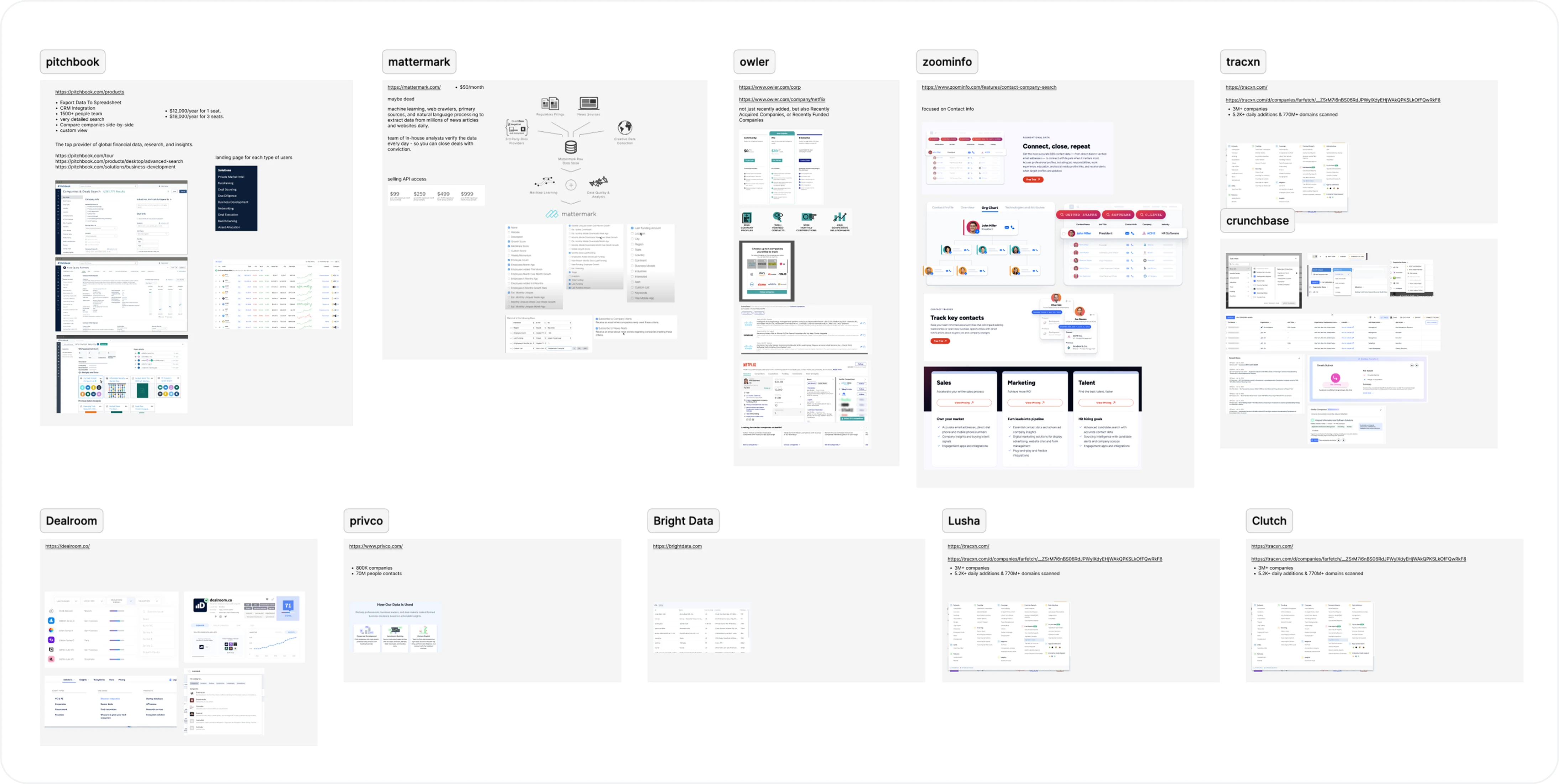
Before designing V1, I compared 11 company-data products across coverage, search, workflow, and price. The research confirmed the gap and shaped two decisions: model companies rather than tokens, and make the starting tier useful enough to replace spreadsheets before asking teams to pay.
V1 launched in 2023 as a category directory with keyword search. I interviewed business development users before launch and continued interviews as the product and dataset grew.
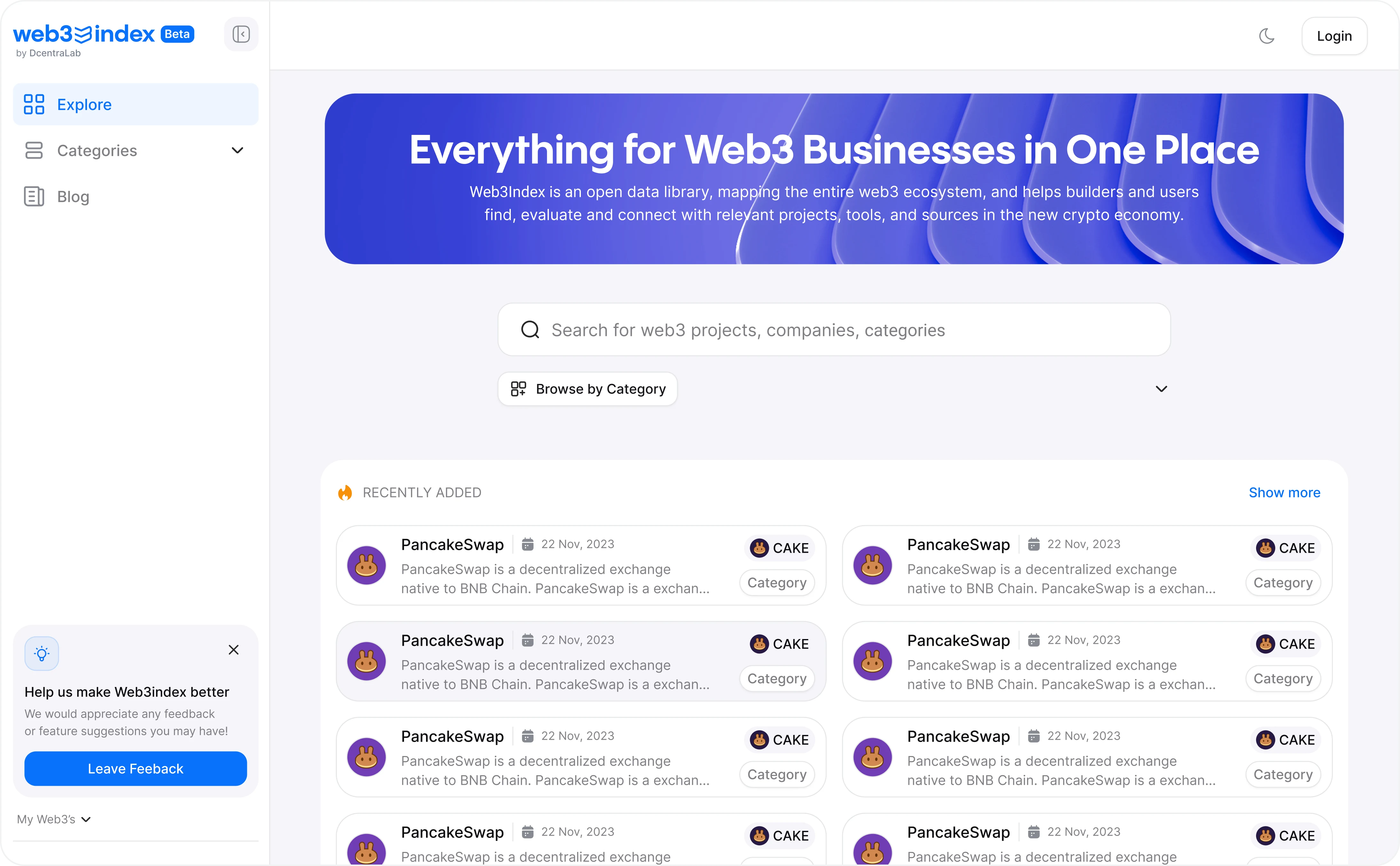
That model worked while the dataset was small. Once individual categories held thousands of companies, browsing stopped answering real questions. Keyword search had the same limit: it only worked when users already knew a name or exact term.
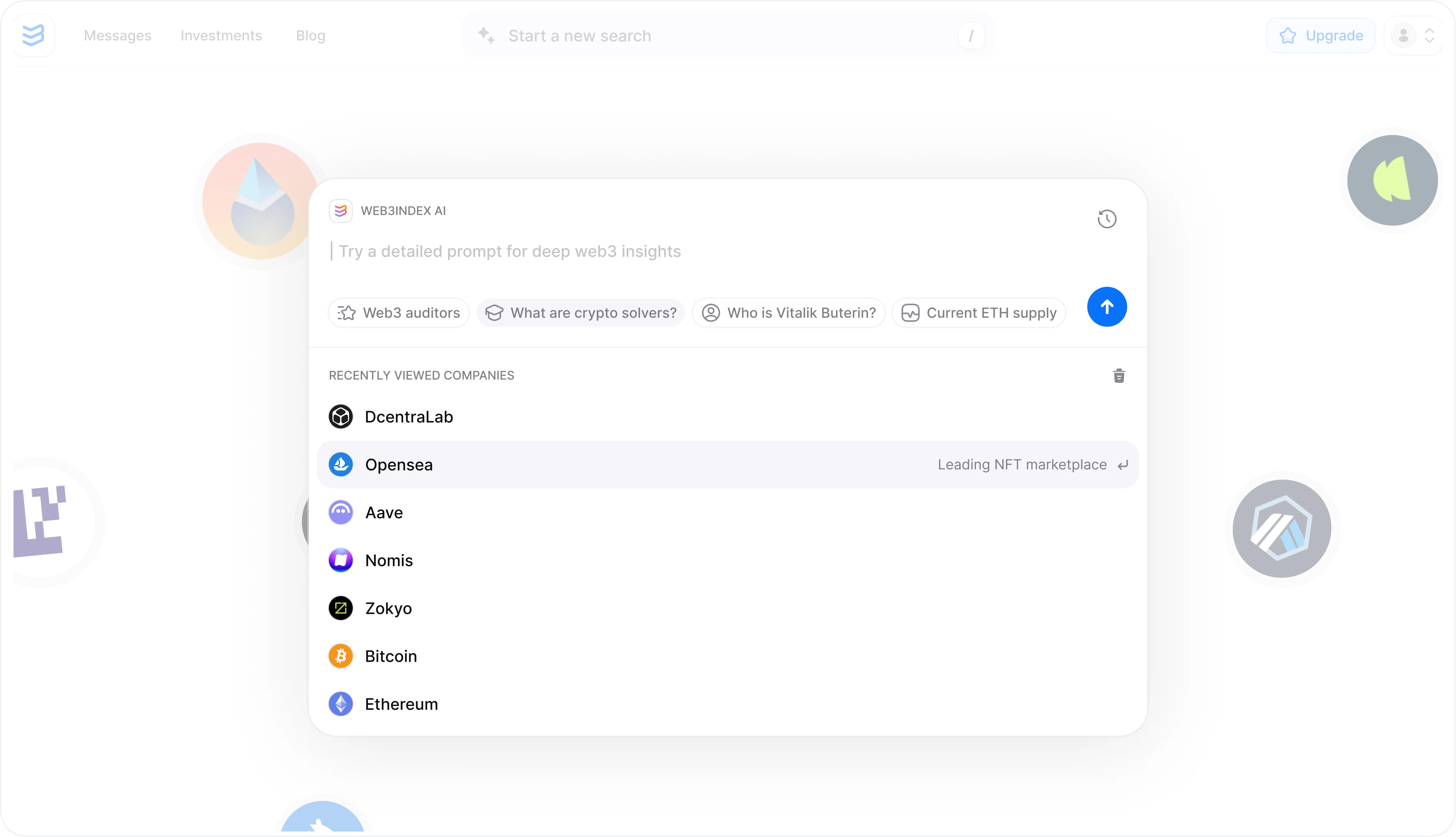
When language models became reliable enough to work with structured company data, we rebuilt the front door around free-form search. The taxonomy, profiles, and underlying data stayed. Suggestion chips in the empty state showed the range of questions the product could answer before users typed anything: a market segment, a concept, a person, or a live data point.
Challenges and trade-offs
The central trade-off was conversational ease versus research trust.
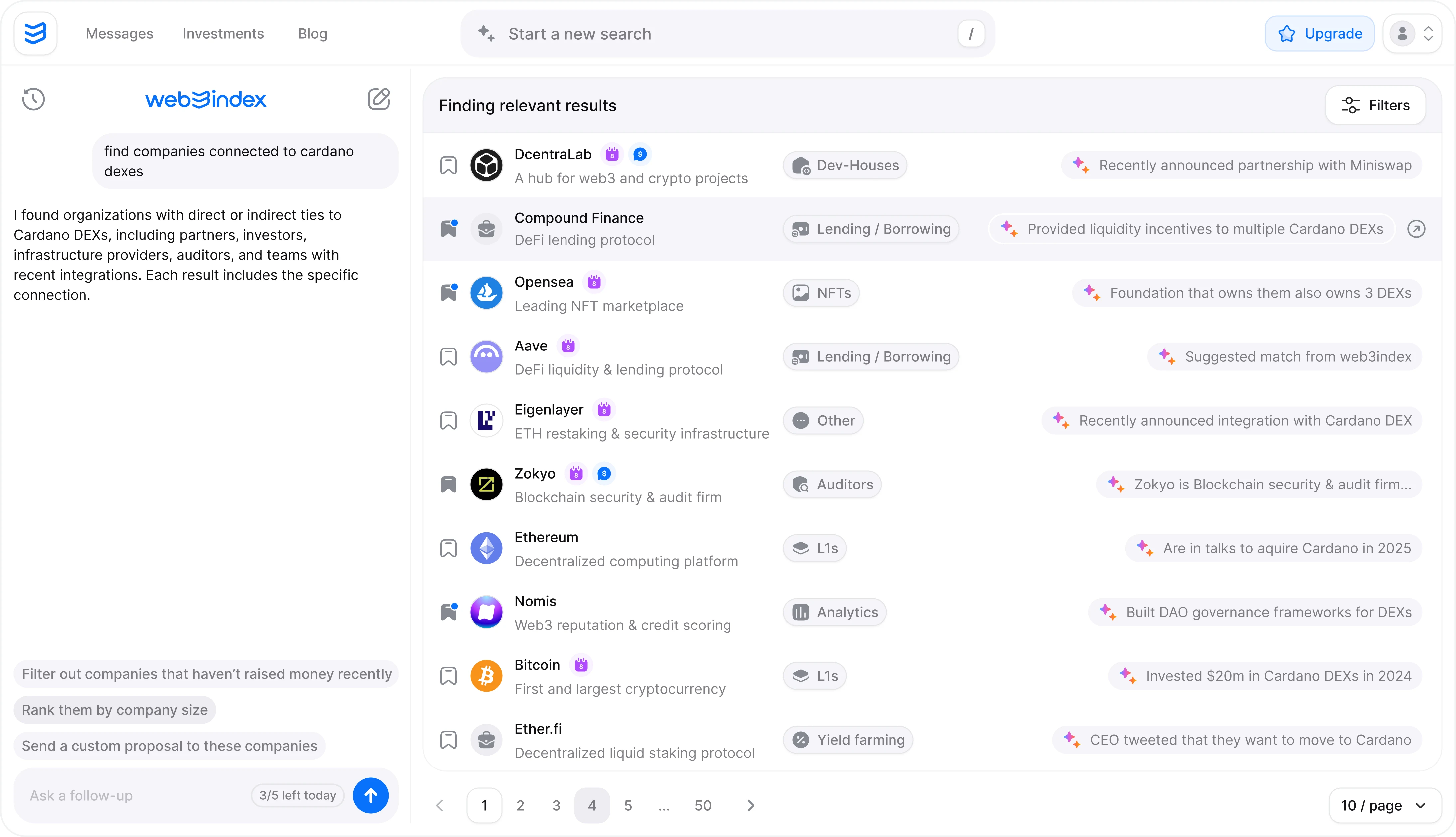
Chat made it easy to ask a question but slow to compare answers. A dense table made comparison precise but left users to interpret every row. I combined them: a persistent conversation on the left for context and follow-ups, with ranked, filterable results on the right.
Each result carries a one-line explanation of why it matches. Users can compare companies and understand unexpected results, such as an audit firm appearing in a DEX query, without trusting an unexplained ranking.
Mobile adaptation
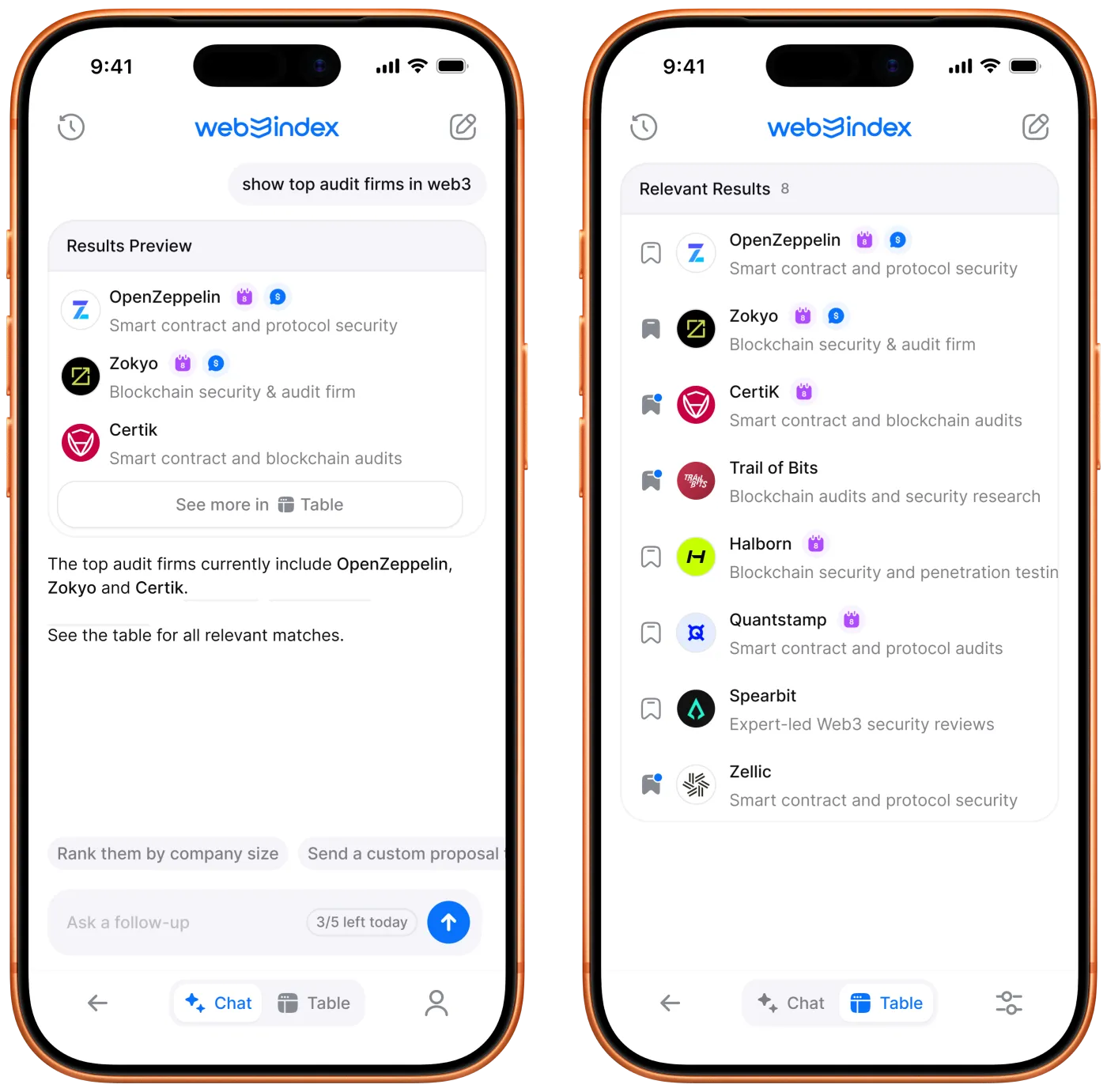
That two-pane layout did not fit on mobile. I split Chat and Table into two tabs so users could switch without losing their place, and changed the footer actions to match the active context. Chat kept follow-up actions close at hand, while Table exposed filters and result controls. The full table remained available through horizontal scrolling instead of being reduced to a simplified card view.
Credibility and ownership
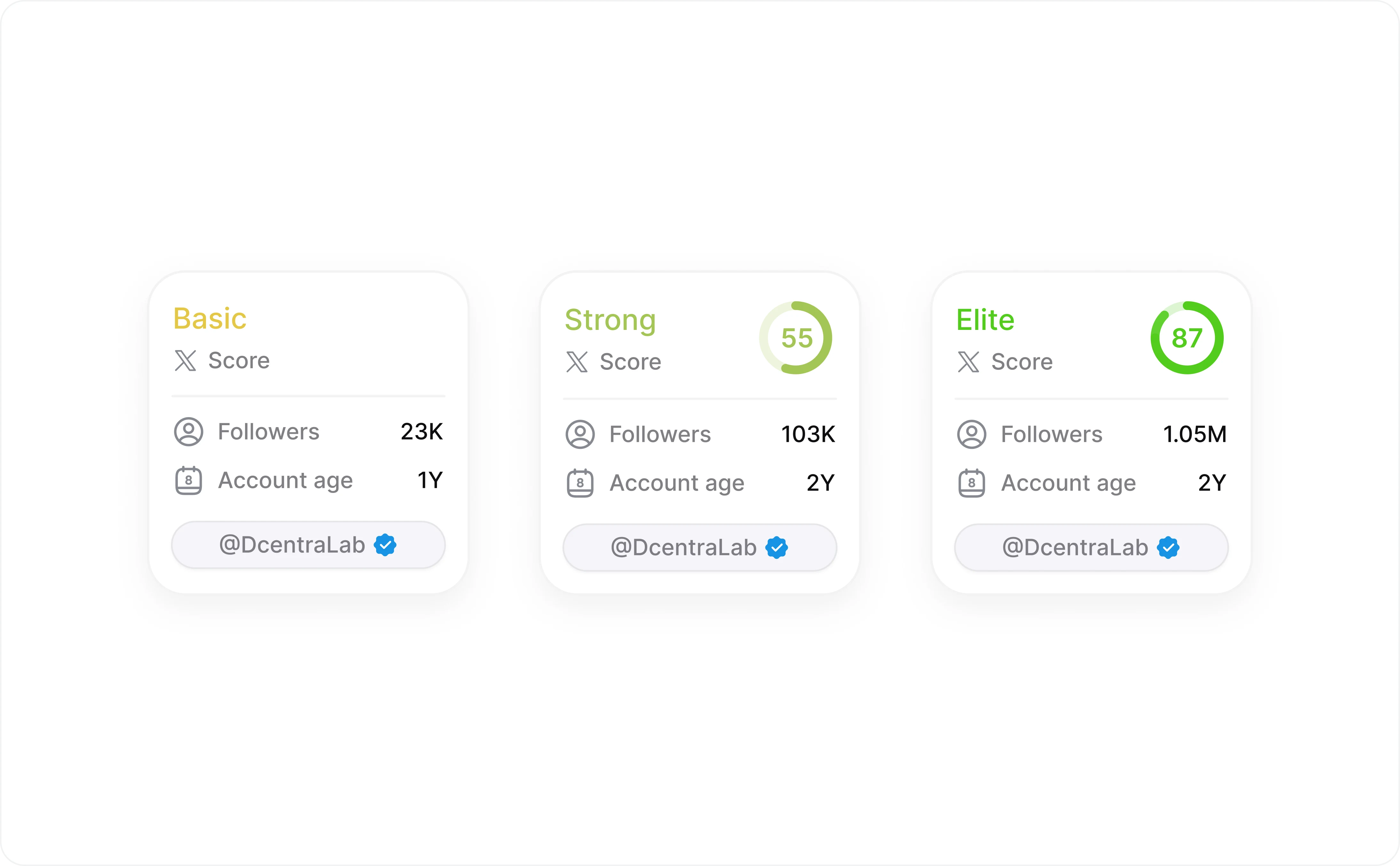
Search relevance was only useful if the results also felt credible. I designed X Score as a lightweight signal from public social data: follower count, account age, and a verified handle. The inputs remain visible so users can see how the score is formed.
The first version labeled the lowest tier "Weak" and showed a low number. User feedback exposed the flaw: we were publicly punishing the companies we wanted to claim and maintain their pages. I renamed the tier "Basic" and removed the number from that state.
Accuracy became the quieter trust problem as the database passed 30,000 profiles. Internal editors could correct data and mark inactive companies with a Dead Tag. Claimed companies could maintain their own profiles; everyone else had read-only access.
Claiming or submitting a page required an email from the company's domain. This verified control of the domain, not the accuracy of every field, but it created a dependable identity layer for messaging and fundraising.
Solution
The shipped workflow connected the whole research loop: ask a question, compare ranked companies, inspect a profile, save notes, and contact the relevant team without leaving the product.
Company profiles
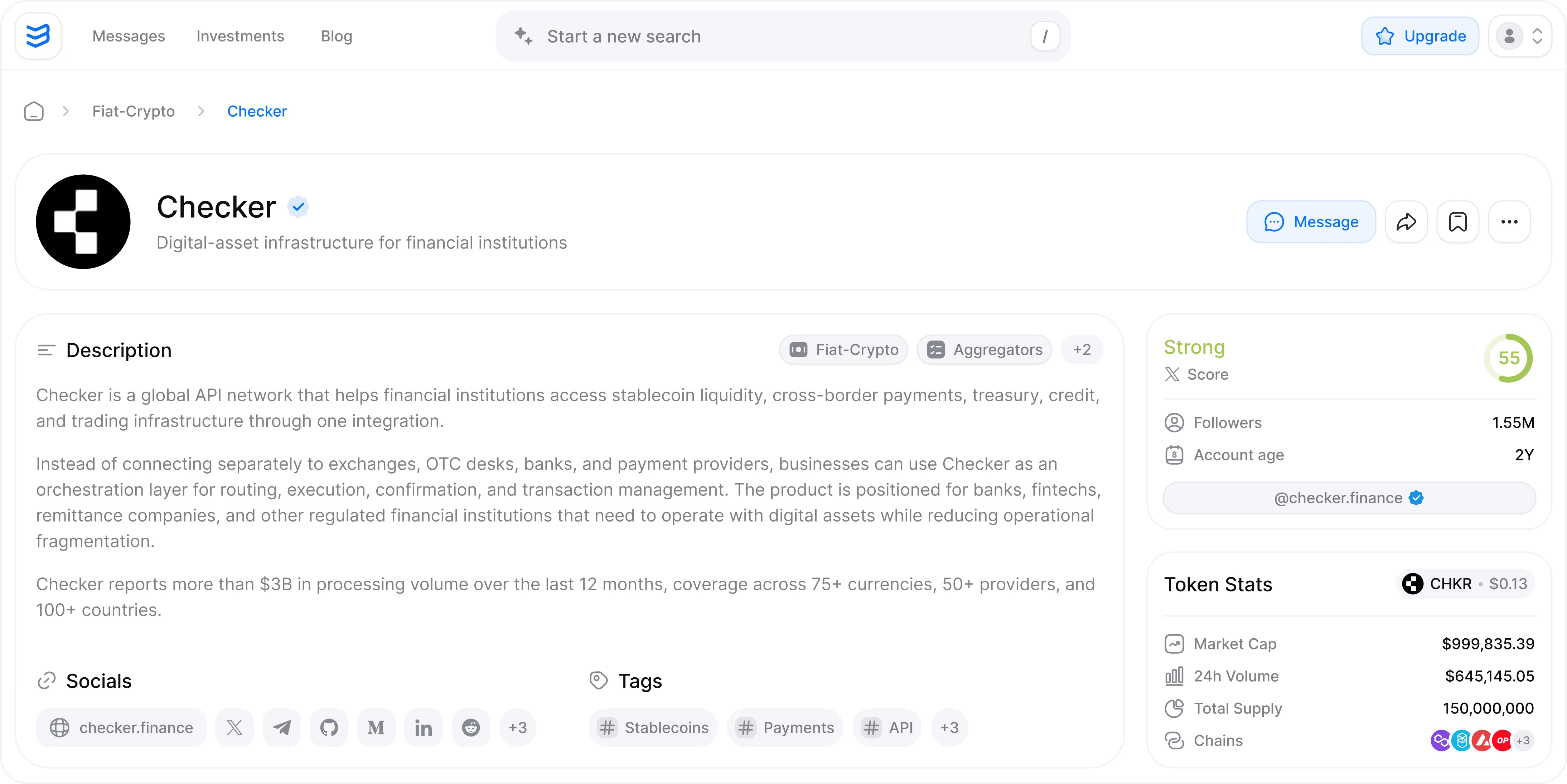
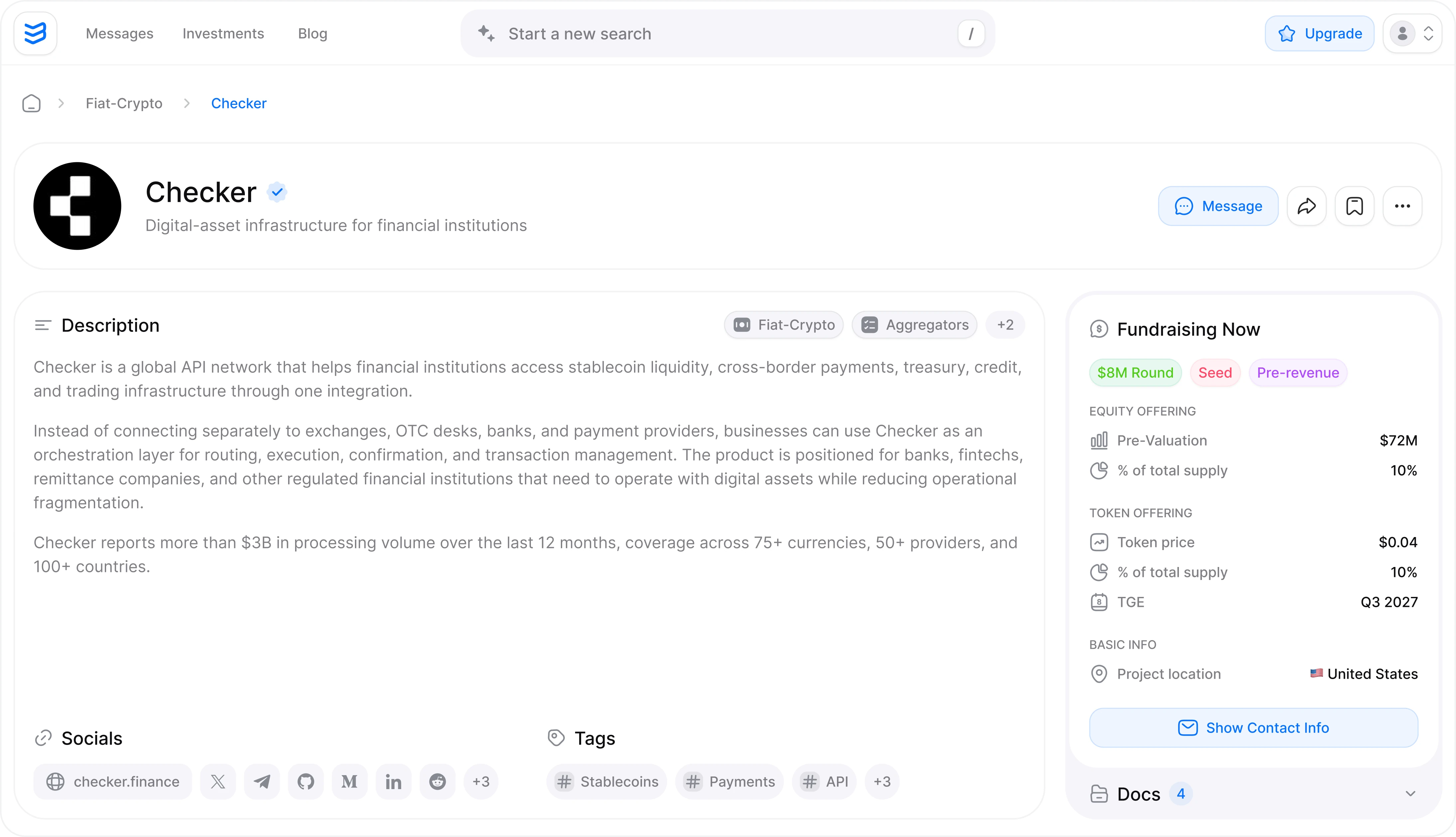
The company profile became the bridge between discovery and action. I organized description, tags, token data, fundraising, documents, and contact actions around four questions: what the company does, whether it looks credible, whether it is raising, and how to reach it. Notes and bookmarks keep each user's research in the same view.
Messaging
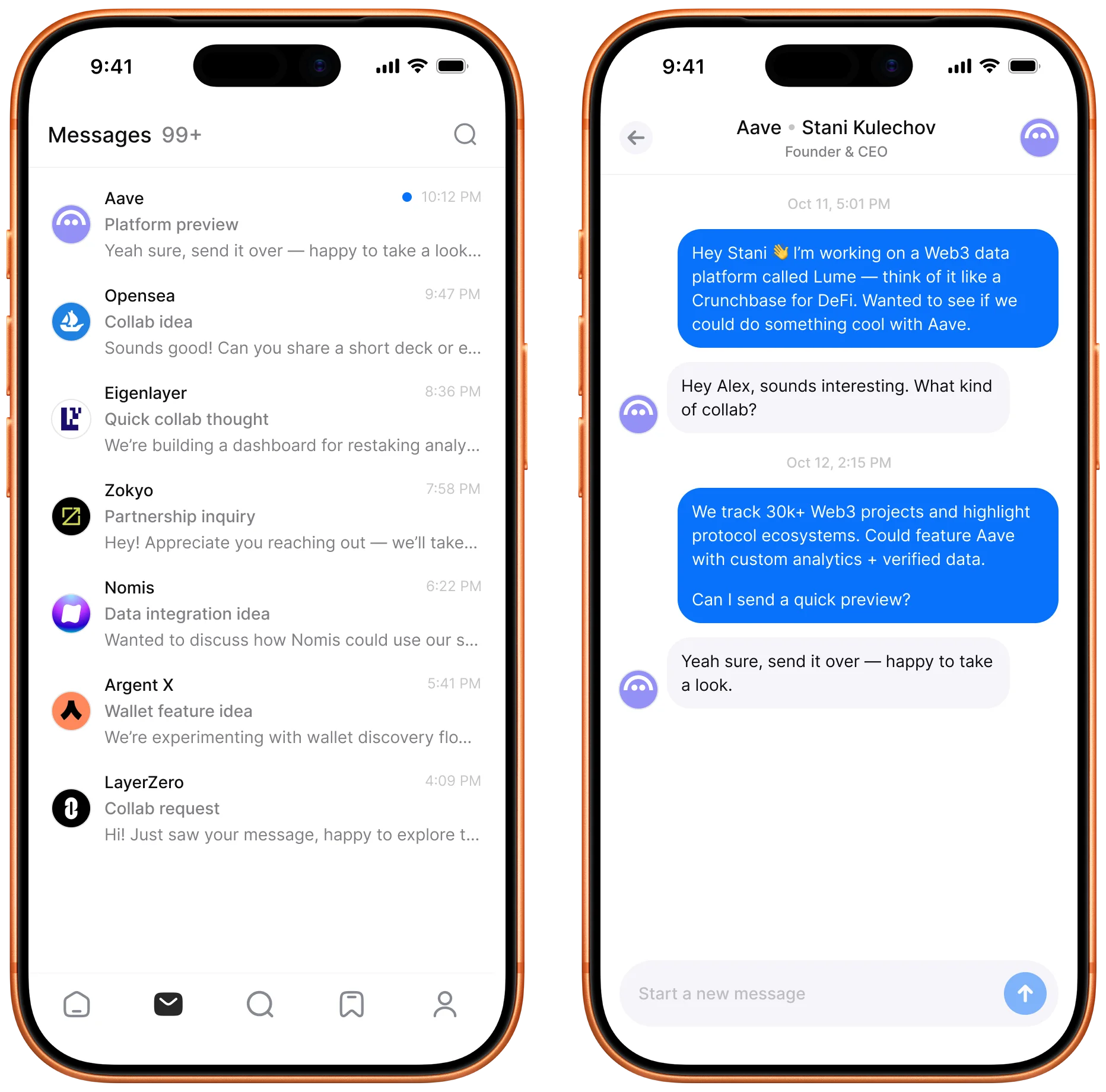
Only companies that verified ownership could send messages, while any listed company could receive them. Messages route to a named department instead of a generic inbox, and an AI refine step helps users tighten the first message before sending.
Investments
The same ownership layer powers a two-sided fundraising surface. Companies choose which equity terms, token terms, TGE dates, and pitch materials to publish. Investors filter the listings, use X Score during diligence, and contact companies through the same messaging system.
Design system
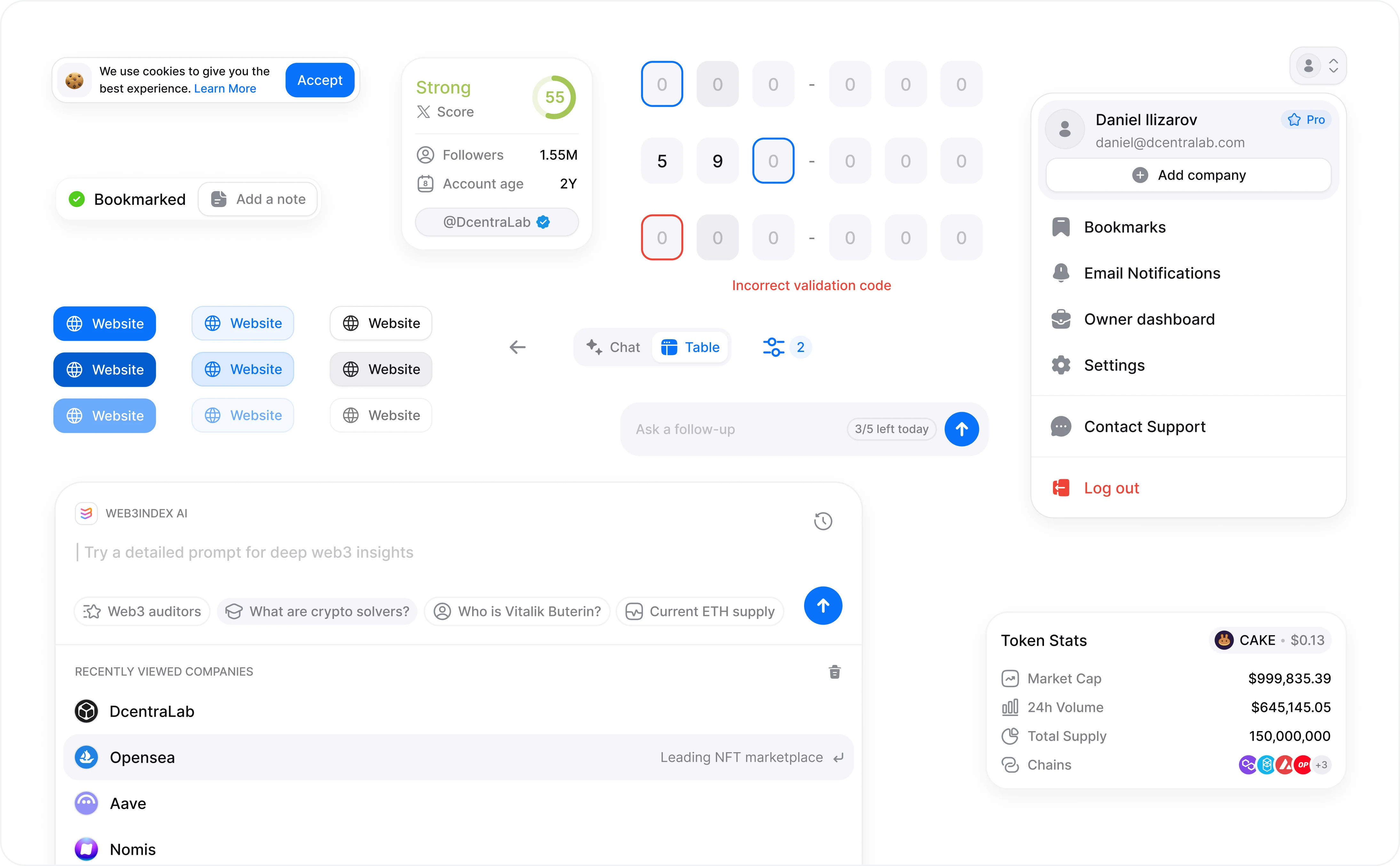
As the only designer, I needed consistency to survive several years of versions without becoming a bottleneck. I built more than 30 reusable components, including the empty, loading, and moderation states that data products spend real time in.
Freemium model
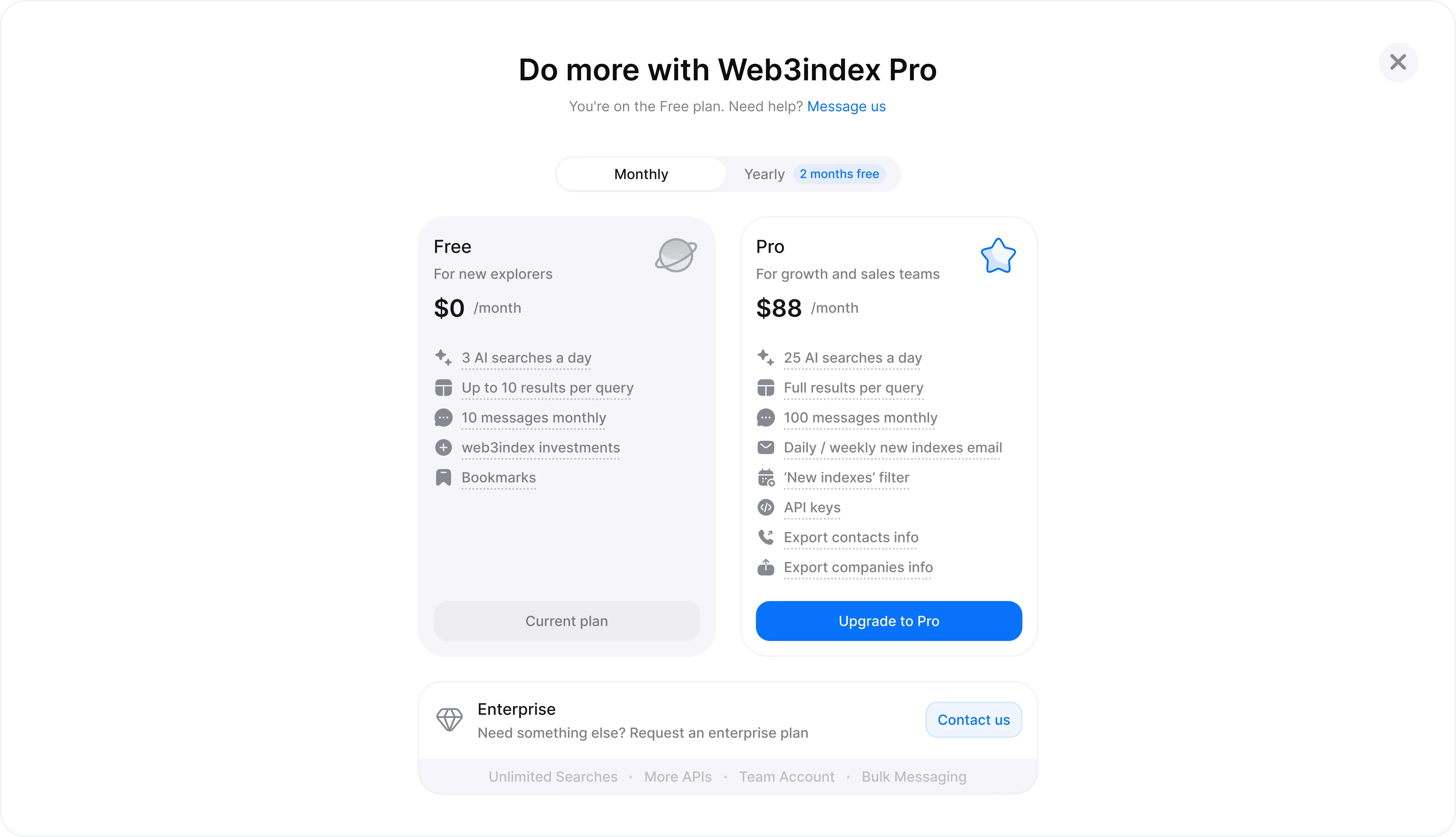
The pricing model kept the starting point genuinely useful. Free users could run core searches, while Pro added advanced filters, messaging, exports, alerts, and API access for teams using Web3Index as a daily research tool.
What shipped
Before Web3Index, this workflow took separate tools for search, company research, outreach, and fundraising. We shipped those jobs as one connected product.
More than 100 companies claimed or submitted profiles. Against a database of more than 30,000 companies, that is an early signal rather than proof of broad adoption, but it showed that companies were willing to verify ownership and participate.
My contribution covered five connected systems:
- Research: AI search, suggestion chips, filters, ranked results, and a reason for every match
- Evaluation: company profiles, live token data, X Score, documents, notes, and bookmarks
- Trust: ownership, domain verification, three access levels, and moderation
- Growth: department-routed messaging, fundraising, and free and Pro pricing
- Foundation: every shipped version from the original directory onward, plus the 30+ component design system
The product was still early, so I do not claim revenue or retention impact that was never measured. The next metrics I would track are search success, profile opens, messages sent, completed claims, and repeat research sessions.